Why a Beetle?
Growing up, I was always fascinated by Beetles.
They looked almost mechanical. Small armoured creatures with shiny shells that felt strong, even a little intimidating. But the moment they opened their shell and flew, something surprising happened. Underneath that hard casing were thin, veined wings moving with unexpected speed and lightness.
It felt like watching a hidden system reveal itself.
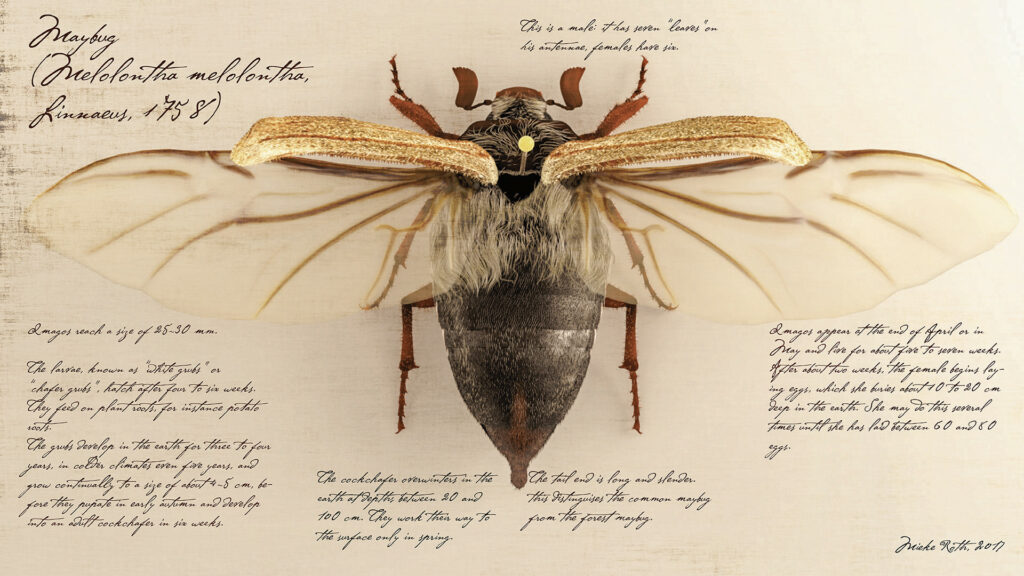
Nature has been solving design problems long before humans started studying them. The beetle is a perfect example. Its hardened outer wings, called ‘elytra’, act as protective casing, shielding the delicate flight wings folded underneath. When the shell opens, those inner wings unfold in seconds, revealing a lightweight structure engineered for lift and motion.
The veins running through those wings aren’t decorative. They act like a framework: distributing force, guiding movement, and giving structure to something incredibly thin.
It’s an elegant piece of engineering: protection when needed, agility when required.
It’s also one of nature’s most successful designs. Nearly 40% of all known insect species are beetles, part of the order Beetle. Their protective shell, flexible wings, and efficient structure have allowed them to survive and adapt for millions of years.
I see product design in a similar way.
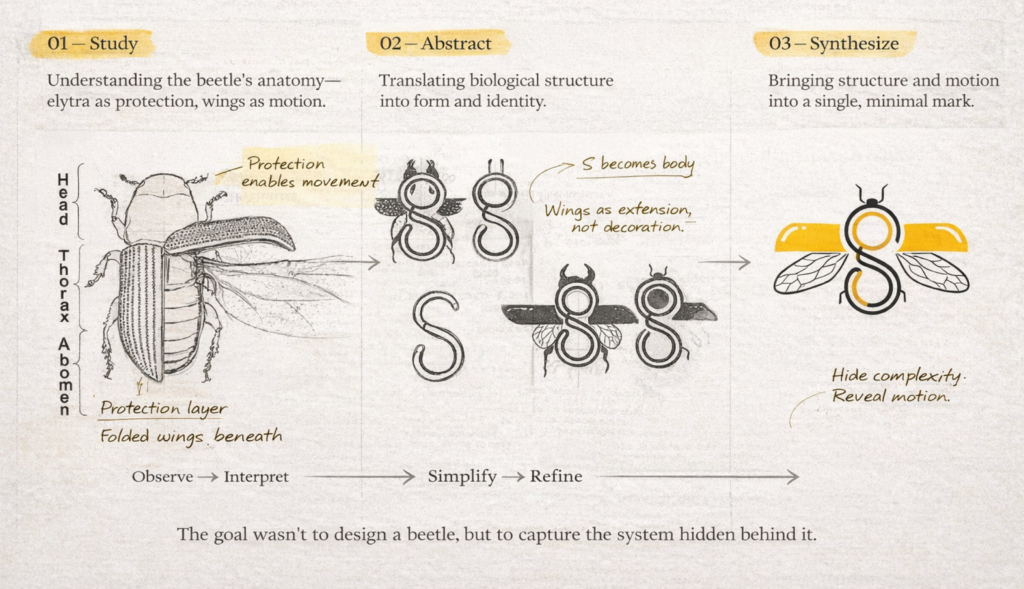
The visible layer of a product – the interface, the simplicity users experience, is like the shell. It protects people from complexity. But underneath that surface lies an intricate system of decisions, patterns, and structures that allow a product to move quickly and adapt.
Like the veins in the beetle’s wings, these systems quietly hold everything together.
Good design, like the beetle, hides its engineering well.
In my logo mark, the body of the beetle forms my initials S and G, while the opening wings represent the moment where structure gives way to possibility.